
HAIR TRANSPLANT RECOVERY IN BODRUM: YOUR WEEK-BY-WEEK AFTERCARE AND SUN SAFETY GUIDE
Choosing where to have your hair transplant is only half of the journey. What happens in the days and weeks after the procedure decides how natural your results look, how quickly you heal, and whether every transplanted graft survives. Bodrum has quietly become one of the most appealing places in Turkey to recover, because it combines experienced clinics with a calm coastal setting where you can rest properly instead of rushing back to a busy routine. But the same sunshine and sea that make Bodrum so relaxing also mean recovery here needs a little extra care. This guide walks you through what to expect at each stage, and how to enjoy the destination without putting your new hair at risk.
WHY RECOVERY MATTERS AS MUCH AS THE PROCEDURE
A modern FUE or DHI hair transplant relocates thousands of individual follicles from the back of your scalp to areas where hair has thinned. For the first one to two weeks, those follicles are still settling into their new home and building a fresh blood supply. During this fragile window, friction, sweat, sun, and infection are the main threats to graft survival. Patients who follow aftercare carefully tend to see fuller, more even results, while those who ignore it can lose grafts they paid for. The good news is that the rules are simple, and a quiet stay by the Aegean makes them easy to follow.
THE FIRST 48 HOURS AFTER YOUR HAIR TRANSPLANT
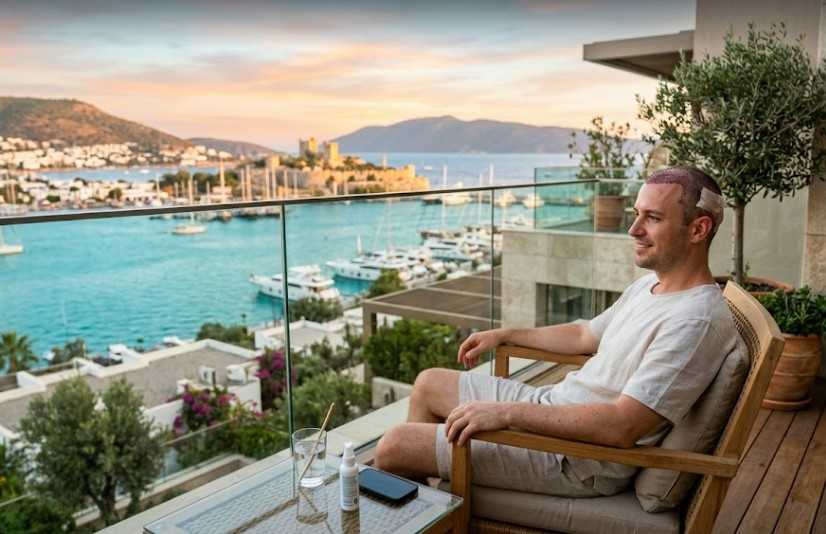
The first two days are the most important. Your scalp will feel tender, and the transplanted area may show tiny scabs and slight redness, which is completely normal. You will be advised to sleep with your head elevated, often using a travel pillow, to reduce swelling around the forehead and eyes. Avoid touching, scratching, or bumping the grafts, and do not wear anything that rubs against the recipient area. Mild swelling that drifts down toward the forehead in the first few days is common and settles on its own. This is a time to do as little as possible, which is exactly why an unhurried hotel stay near the marina or in a quiet neighbourhood works so well during this phase.
WEEK ONE: PROTECTING THE GRAFTS
Through the first week, the grafts gradually anchor themselves. You should keep physical activity to a minimum, avoid bending over for long periods, and steer clear of anything that makes you sweat heavily. Sweat can irritate the healing scalp and increase the risk of infection. Most clinics in Bodrum schedule a first gentle wash for you, then teach you how to repeat it carefully at home. Light walks along the harbour in the cooler morning or evening hours are usually fine, but the gym, intense hiking, and water sports are off the table. Keeping your head covered loosely with a recommended hat when outdoors helps, as long as it does not press directly on the grafts.
WEEKS TWO AND THREE: SCABBING AND SHEDDING
By the second week, the small scabs begin to flake away naturally during your gentle washes. Never pick or scratch them, as forcing them off too early can dislodge a graft. Around weeks two to four, many patients experience what is called shock loss or shedding, where the newly transplanted hairs fall out. This can be alarming if you are not expecting it, but it is a normal and temporary part of the process. The follicle itself stays safely in place beneath the skin and will produce new growth in the months ahead. By the end of week three, the visible signs of surgery have usually faded, and you can return to most normal daily activities with your surgeon’s approval.
THE FIRST MONTH AND BEYOND
After about a month, the scalp generally looks calm and the redness has resolved for most people. Real regrowth is a patient game: new hairs typically start appearing from around month three or four, thicken steadily through months six to nine, and reach their final density at roughly twelve to eighteen months. Understanding this timeline matters, because it stops you from judging your result too early. The transplanted hairs that shed will grow back stronger and permanent, since they come from a donor region genetically resistant to balding.
SUN EXPOSURE AFTER A HAIR TRANSPLANT
This is where Bodrum recovery needs special attention. A freshly transplanted scalp is highly sensitive to ultraviolet light. Direct sun in the first weeks can burn the delicate healing skin, increase redness and swelling, and in the worst cases damage grafts or cause uneven pigmentation and scarring. As a general rule, keep the recipient area out of direct sunlight for at least the first two to four weeks, and protect it for several months afterward. During the early period, the safest approach is shade, a loose breathable hat once your clinic says a hat is allowed, and avoiding the midday hours when the Aegean sun is strongest. Sunscreen should not be applied directly to the grafts in the early healing phase, so physical shade and timing are your best tools. Plan beach time and long outdoor excursions for later in your trip, or save them for a return visit once your scalp has fully settled.
CAN YOU SWIM IN THE SEA OR POOL?
Swimming is one of the first questions Bodrum patients ask, and the answer requires patience. Salt water and chlorinated pool water can both irritate the healing scalp and carry a risk of infection while the grafts are vulnerable. Most surgeons advise waiting around two weeks before any swimming, and often a little longer before submerging your head, with the sea and chlorinated pools treated with extra caution. When you do return to the water, ease in gently and rinse with clean fresh water afterward. The temptation to dive straight into Bodrum’s beautiful bays is understandable, but a couple of weeks of restraint protects an investment that lasts a lifetime.
WASHING YOUR HAIR THE RIGHT WAY
Gentle, correct washing is central to good healing. Your clinic will give you a specific routine, usually starting a day or two after the procedure with a special lotion and mild shampoo. The technique involves applying foam softly with your fingertips, never rubbing or using a strong jet of water directly on the grafts, and patting rather than towelling dry. Lukewarm water is best, and high-pressure shower heads should be avoided in the early days. Following this routine helps scabs soften and clear naturally without disturbing the follicles underneath.
WHAT TO EAT AND AVOID DURING RECOVERY
Healing is supported from the inside too. A balanced diet rich in protein, vitamins, and minerals gives your body what it needs to repair tissue and support follicle growth. Staying well hydrated is important, especially in the warm Bodrum climate where it is easy to lose fluids. Alcohol and smoking are best avoided for at least the first week or two, as both can interfere with blood flow and slow healing. Bodrum’s fresh Aegean cuisine, full of fish, vegetables, olive oil, and seasonal produce, happens to align nicely with what a recovering scalp benefits from.
TURNING RECOVERY INTO A RELAXED BODRUM STAY
One of the real advantages of having your procedure here is that recovery does not have to feel like downtime. The quieter stretches of the first two weeks can be spent resting in a comfortable hotel, taking short morning walks, enjoying calm meals, and avoiding the stress that often interferes with healing back home. As the days pass and your surgeon clears more activity, you can gradually explore the gentler side of the town. Keeping outdoor time shaded and unhurried in the early phase means you still get the restorative feel of a coastal break without compromising your results.
WHEN TO CONTACT YOUR CLINIC
Most recoveries are smooth, but you should know the warning signs. Contact your clinic promptly if you notice spreading redness, increasing pain rather than steadily decreasing discomfort, signs of pus or discharge, a fever, or anything that feels clearly out of line with the normal healing described to you. Having your procedure in Bodrum means your surgical team is close by during your stay, so questions can be answered quickly and any concern can be checked in person before you travel home.
HAIR TRANSPLANT RECOVERY IN BODRUM
A successful hair transplant is a partnership between a skilled clinic and a patient who looks after the result. Bodrum offers an unusually pleasant place to heal, but its sun and sea call for a little discipline in the early weeks. Protect the grafts from direct sunlight, hold off on swimming until your surgeon agrees, wash gently, rest well, and let the timeline do its work. Follow these steps and you can return home with healthy, settling grafts and the confidence that your new hairline will keep improving for many months to come.